
Exploring whether a racial hierarchy exists in the UK
AFRIPHOBIA & THE GRAMMAR OF SOCIAL DEATH
Exploring Racial Hierarchy and the Path to Redesign
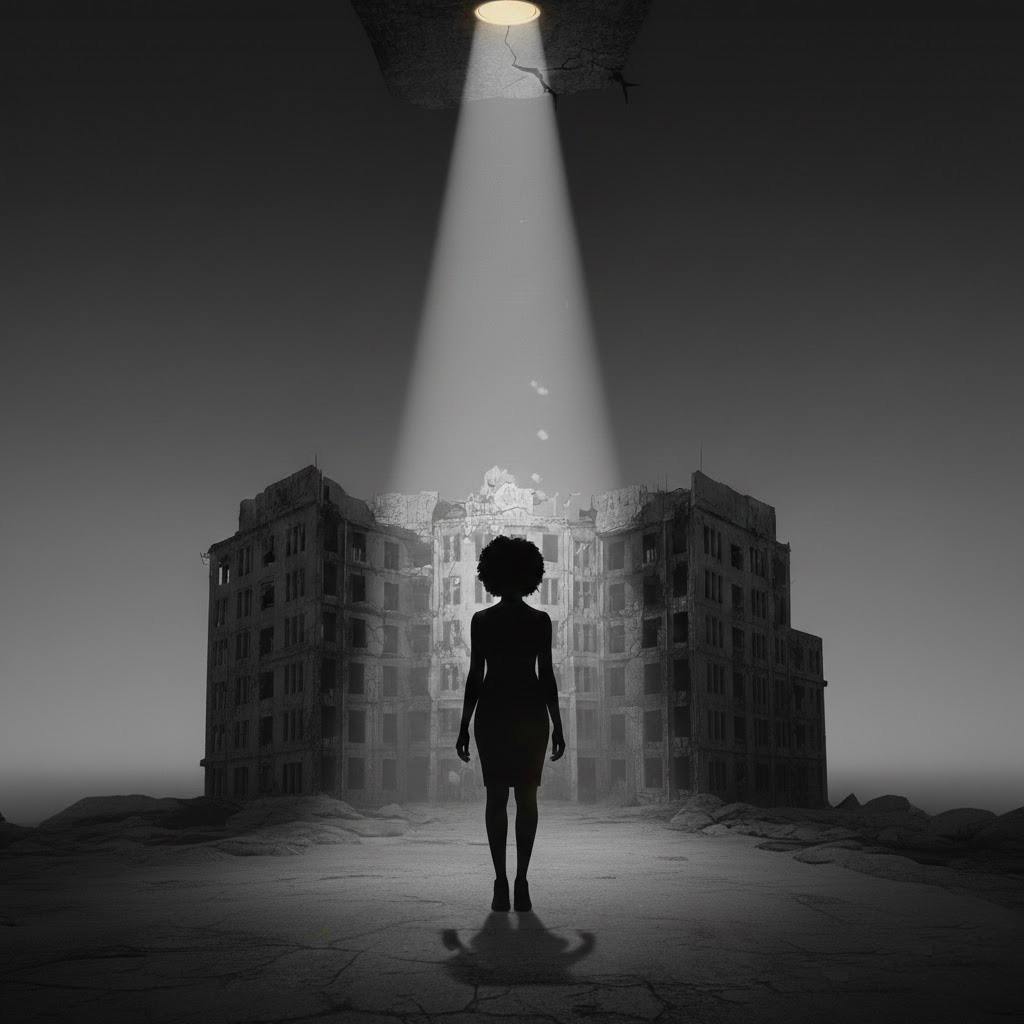
The Introduction (The Soul)
Witnessing, Resistance, and Redesign
This gallery is a culmination of research exploring Afriphobia and the racial hierarchy within the UK. It centres the voices, images, and lived experiences of Black British women who chose to move beyond being “data points” to become co-creators of a new narrative.
Introductory Note
“A Separate Land” is a poetic synthesis of research exploring the positioning of Black British women within the UK racial hierarchy. It navigates the ‘Grammar of Social Death’ by illustrating the tension between hyper-visibility and the erasure of Afriphobic violence. By deconstructing a ‘standard of Blackness’ often centred on the male experience, this piece centres the unique lived reality of Black women. It challenges the neoliberal fetishisation of ‘resilience’, reframing survival not as the quiet endurance of suffering, but as an active, joyful act of resistance.

A Separate Land
Verse 01: What it means to be a Black woman
What it means to be a Black woman — is tangled in the word race — and race itself declares we were never meant to win this chase.
We’re the poster girls for “diversity and inclusion,” paraded through the workplace fair, but look up that ladder — it’s white, all the way up there.
Even our hair gets shade because it grows to sun; we’re taught to hide the light — ashamed of what’s begun.
Full Version
What it means to be a Black woman — is tangled in the word race — and race itself declares we were never meant to win this chase.
We’re the poster girls for “diversity and inclusion,” paraded through the workplace fair, but look up that ladder — it’s white, all the way up there.
Even our hair gets shade because it grows to sun; we’re taught to hide the light — ashamed of what’s begun.
What it means to be a Black woman — is masking from the start of the day. For some, it’s putting on a wig, ‘cause that’s the only way.
That mask? It’s worn before we reach the door — clothing, colour, and a whole lot more.
I am demoralised. Beaten — in word and deed. Unfairly arrested, made visible as if I’m the face of the world’s misdeeds.
And when I should be seen — I disappear, drowned by your discomfort, erased by your fear.
What it means to be a Black woman — is something even Black men can’t understand. The standard of Blackness judged through them, but we enter from a separate land.
Don’t look to a Black man for backup — they are a racial currency, and when the world turns cruel, too many look away from me.
So goes the Black woman’s journey: Alone. Watched. Annoyed — Denied the fire of anger, folded into something we have to hide.
It’s living in constant fear — rebranded “resilience” with a grin, applauding the strength it takes to survive the mess they put us in.
There’s nothing to clap for when every day you’re the mule, when they pile on stick after stick and call you strong — we’re not fooled.
So when I hear “resilience,” it sounds like a threat — ’cause their “resilience” is suffering neatly packaged as respect.
But listen — here’s the part that sings for me: The joy. The celebration. The rhythm, the sway. The music that moves my way.
The fact that we’re still here — that speaks volumes, clear. The fact that we’re emulated, even when they won’t revere.
Our language, our earrings, our fashion — all seen. You steal it, you wear it, you claim it’s your dream — another way to take away how I am not seen.
What it means to be a Black woman — is something dark, deep down inside. Not the colour of my skin, but the fear they’d rather I didn’t survive.
But here’s my truth, sincerely — with my sisters by my side, we manage, we survive, and sometimes — we even rise.
What it means to be a Black woman — a story bold and true, yet too many don’t listen, and some resent the truth from you.
So what does it mean to be a Black woman? Sometimes, I still don’t know. Because some days — just being feels like the hardest thing to show.
And yet — We stand — Not because the world was kind, but because we refused to disappear. We are not resilience; we are resistance — With joy, with hope, with fear.
So, we keep on moving — because we Dare.
By Roz Etwaria
The Witnessing Gallery: A Separate Land
This video synthesis captures the core of our research into the ‘Grammar of Social Death’. It centres the lived experiences of Black British women, moving beyond ‘data points’ to illustrate the tension between hypervisibility and systemic erasure.
The Evidence & Findings Section
THE FRAMEWORK
This work identifies the “Grammar of Social Death” through two primary frameworks: BLACKOUT (the institutional silencing of Black contexts) and POPS (the perpetual, embodied pain of anti-Blackness).
The Three Pillars of Erasure
Conditional Belonging Participants consistently described their British identity and belonging as perpetually provisional. Legitimacy was routinely questioned in everyday encounters, echoing the “Windrush” legacy and reinforcing a state of “natal alienation” where belonging must constantly be proven.
Fungibility & Extraction Black women reported being highly visible as symbols for “diversity” optics, yet invisible when it came to authority, attribution, or advancement. Their labour and ideas were often extracted without credit, positioning them as interchangeable commodities within institutional economies.
Emotional Labour as Survival 75% of survey respondents reported tempering emotions and modifying behaviour to avoid negative stereotyping. This constant self-regulation—a form of high-stakes emotional labour—is a mandated survival tactic that exacts a significant psychological and physical toll.
The Statistical Impact
97% Confirmation:
The vast majority of participants identified a rigid hierarchy that systematically positions Black women at the point of “social death.”
Takeaway Resources & Institutional Tool
The Redesign Manifesto
This provides a practical framework for dismantling the ‘Grammar of Social Death’. It outlines how to move from institutional suspicion to presuming credibility and provides specific methods for reforming accountability.
The Reflective Harvest
This resource bridges the gap between research and reflection
The Research Archive
This houses the foundational data, including the 97% confirmation of the UK’s racial hierarchy
1
2
3
Get Social
News & Resources

Guest House – Rumi
The dark thought, the shame, the malice,
Meet them at the door laughing,
And invite them in.

The Trauma Industrial Complex: An Ethical Test for Modern Leadership
I. The Price of Witnessing Grief We’ve all seen it — raw, on-screen interviews with survivors of catastrophic events. Moments of unbearable pain turned into public spectacle. What should be dignified reporting often becomes a consumable commodity. This defines the...

Stop Protecting Privilege and Start Protecting People
Why our laws must move beyond allegiance and start defending the vulnerable instead of the powerful. The recent scandals surrounding figures of immense privilege and influence have revealed a painful truth: our system of protection for young women is broken. When the...
Let’s Learn Together!