
RESEARCH INTO RACIAL HIERARCHY IN THE UK
Beyond the Silence: Black British Women and Afriphobia
Community Learning from Black Women’s Research, History and Resistance
This page shares community learning from research into Afriphobia, racial hierarchy and the lived experiences of Black British women. It honours the women who contributed and offers accessible language for understanding erasure, harm, resistance and change.
It is not the full research report. It is a public learning resource designed to make the key ideas easier to understand, discuss and use in community, education and organisational settings.
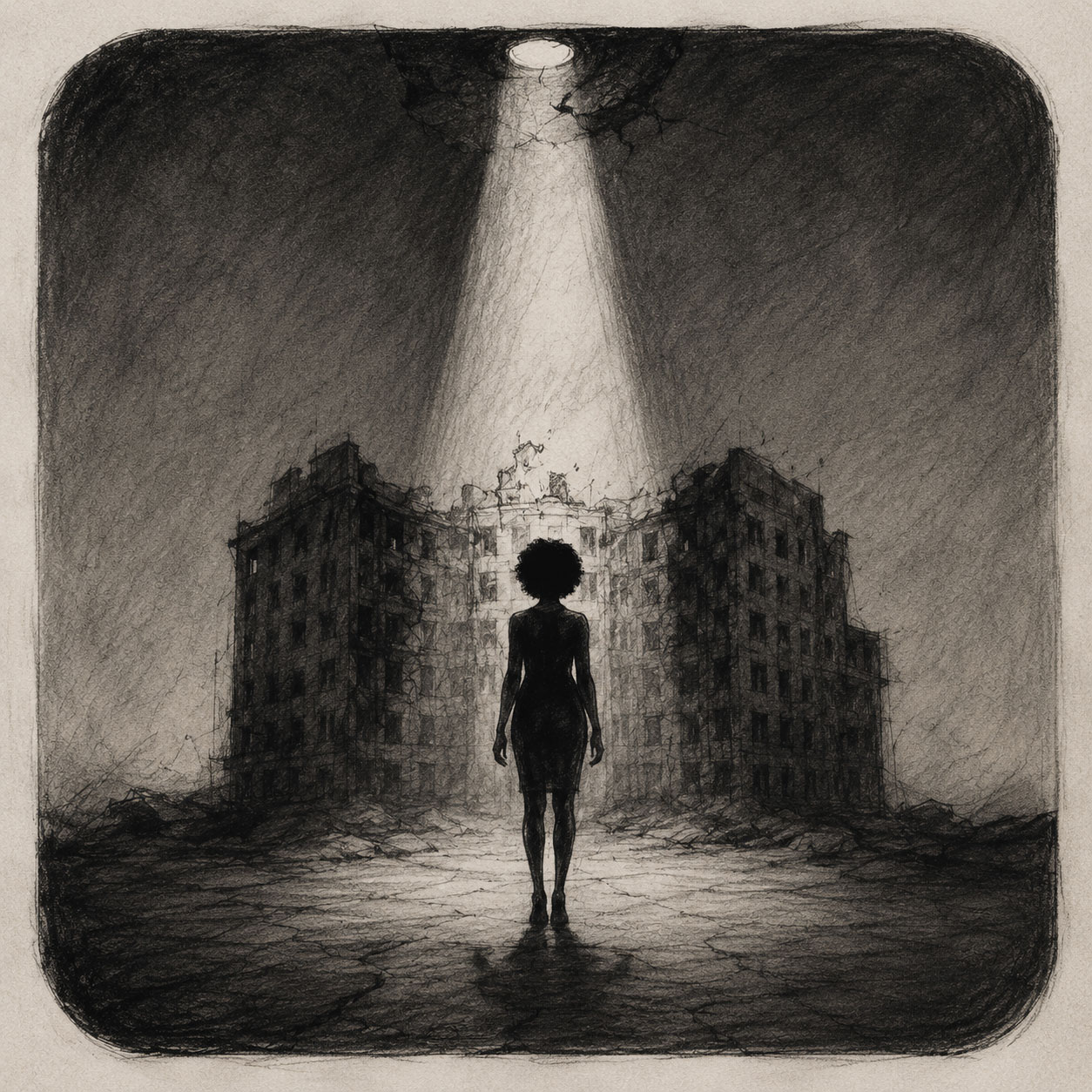
Listening, Learning and Remembering
The research asked whether a racial hierarchy exists in the UK, where Black British women are placed within it, and how this affects everyday life, wellbeing, belonging and voice.
The research listened through interviews, images and survey responses.
Some women shared stories.
Some shared images.
Some completed the survey.
Together, their contributions helped name patterns that are often felt but not always recognised.
Thank You to the Women Who Shared
This work exists because Black women gave their time, honesty, creativity and courage.
Their words and images were not just “data”.
They were acts of witness.
They helped make visible experiences that are too often ignored, dismissed or made smaller than they are.
This page honours the women who contributed to the research and the knowledge they offered.
Thank you for trusting this work with your stories.
Naming Afriphobia
This research uses the word Afriphobia to name hostility, fear, devaluation or disregard directed at people of African descent.
Many Black women already know these experiences in their bodies, families, workplaces, schools, services and communities.
The purpose of naming Afriphobia is not to explain racism to those who live with it.
It is to make the pattern visible.
It is to give language to what is often minimised.
It is to challenge the idea that these harms are isolated misunderstandings, personality clashes or “just the way things are”.
Afriphobia can be loud and obvious.
It can also be quiet, ordinary and difficult to prove.
This research focused on how Afriphobia affects Black British women’s everyday lives, wellbeing, belonging, voice, safety and bodies.
The Research Asked
Does a racial hierarchy exist in the UK, and if so, where do Black British women stand within it?
It explored how racism affects everyday life, belonging, voice, safety, wellbeing and the body.
It also listened for something deeper:
What happens when Black women are expected to keep going, stay strong, explain themselves, absorb harm and still remain silent?
The learning on this page comes from Black women’s words, images and reflections.
What the Research Found
The research found that Afriphobia is not always experienced as one single event.
For many Black British women, it can feel repeated, layered and exhausting.
Women described being visible and invisible at the same time.
Visible when being judged. Invisible when needing care.
Visible when organisations wanted diversity. Invisible when asking for power, pay or protection.
Visible as a stereotype. Invisible as a full human being.
Six Patterns
1. Black women are often not believed
2. Black women carry too much emotional labour
3. Inclusion is conditional
4. Black women are often used but not valued
5. Racism affects the body
6. Afriphobia can also be practised by other communities
Concepts Developed Through the Research
This research developed two original concepts: BLACKOUT and POPS.
Both concepts were developed by Roz Etwaria through her research with Black British women.
They offer accessible language for patterns that many people recognise, but may not have had words for.
BLACKOUT helps name how Black women’s realities are erased.
POPS helps name what repeated harm can do to the body, mind and spirit over time.
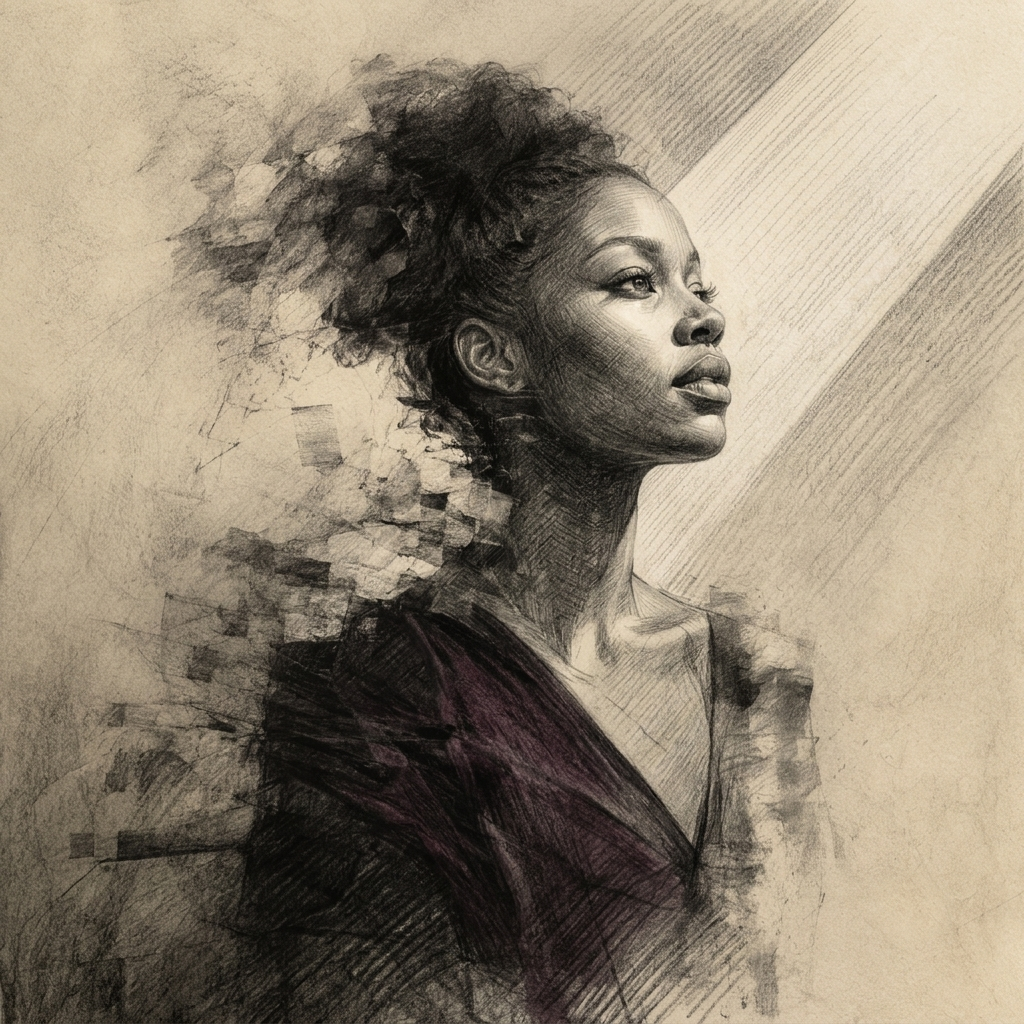
BLACKOUT: Naming Erasure
BLACKOUT is an original concept developed by Roz Etwaria through this research.
It names a pattern many Black women already recognise: the way Black lived experience, ancestral knowledge and historical context can be erased, renamed, ignored or made harder to access.
BLACKOUT stands for:
Black Lived and Ancestral Contexts Killed by Official Uniform Tactics.
The concept helps describe how erasure can become ordinary through systems, policies, procedures, curriculum choices, complaint processes, professional standards and institutional habits.
BLACKOUT can happen when Black-authored knowledge is removed or ignored.
It can happen when racism is treated as bad manners.
It can happen when Black women are blamed for naming harm.
It can happen when institutions demand endless proof but still refuse to believe.
BLACKOUT asks:
What is being hidden, dismissed, removed or renamed here?
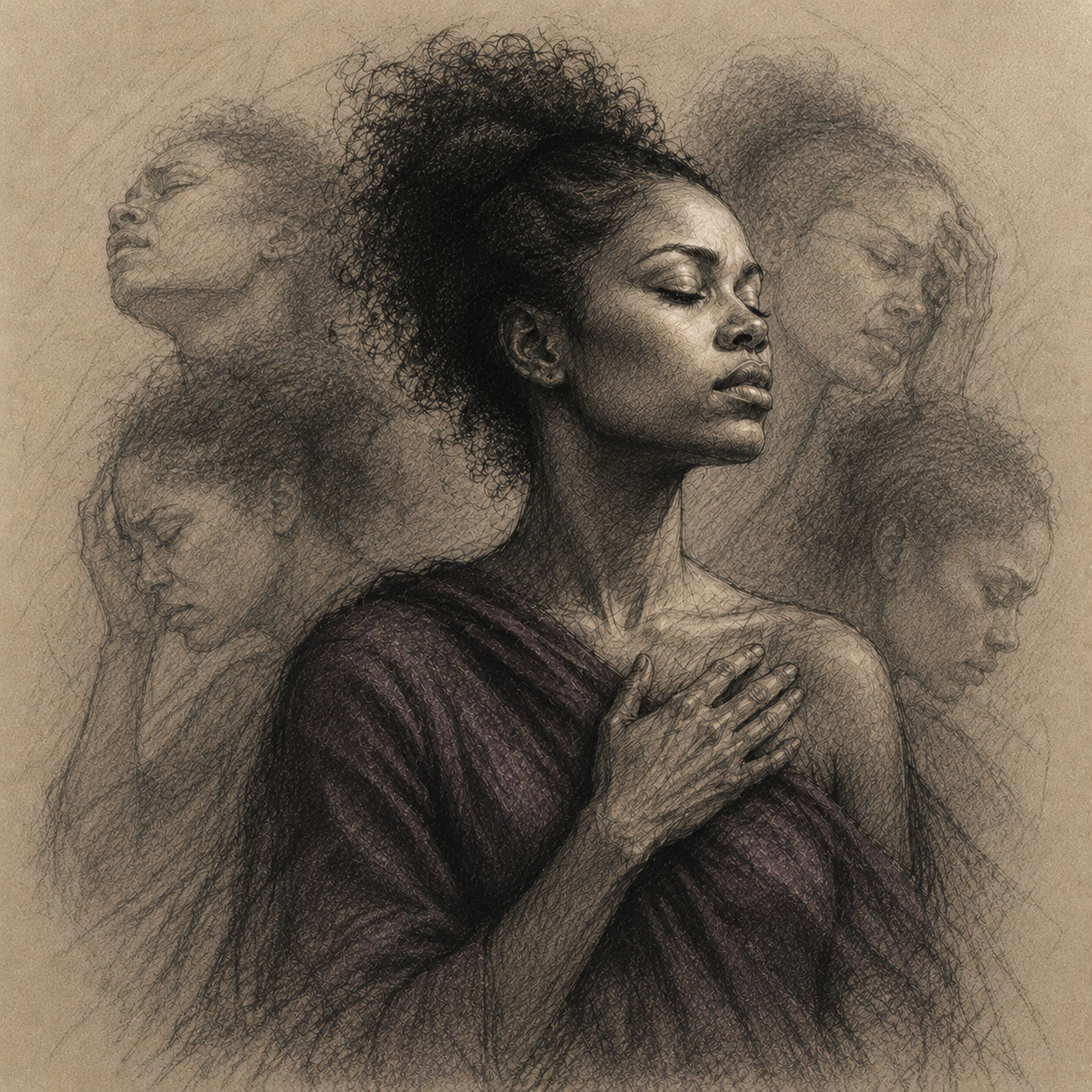
POPS: Naming the Toll of Harm That Keeps Happening
POPS is an original concept developed by Roz Etwaria through this research.
POPS stands for Perpetual Oppressive Pain Syndrome.
It names the ongoing emotional, physical and spiritual toll of living under repeated Afriphobia.
POPS is not offered here as a medical diagnosis.
It is a research concept that helps describe the strain many Black women already recognise: the pain of harm that keeps happening before the body, mind or spirit has had time to recover.
POPS asks:
What happens when people are expected to heal while still being doubted, watched, dismissed, overworked or overburdened?
It gives language to the cost of surviving repeated harm.
It is not weakness.
It is not oversensitivity.
It is not a failure to cope.
It is the body and mind responding to pressure that should never have been normalised.
Why These Concepts Matter
BLACKOUT and POPS matter because naming harm can change how people understand it.
When harm has no language, it can be made to look like a misunderstanding, a personality issue, a bad day, or something a person should simply “get over”.
But when patterns are named, they become easier to see.
They become easier to challenge.
They become easier to discuss in families, workplaces, schools, community spaces and services.
These concepts are not offered as final answers.
They are tools for noticing, questioning and beginning better conversations.
The Body Remembers: Weathering, POPS and Rest
Research on weathering shows that repeated exposure to Afriphobia, stress, and social pressure physically alters the body over time. This can manifest as chronic tiredness, tension, high alert, poor sleep, and emotional exhaustion.
The data is stark: weathering research has found that Black women show some of the highest levels of bodily wear and tear, particularly between the ages of 35 and 64, and that poverty alone does not explain the difference.
This matters. It shows that racism is not just an unpleasant interaction; it leaves a physical imprint. This connects directly to POPS (Perpetual Oppressive Pain Syndrome), which names the toll of harm that keeps happening before the body has had time to recover.
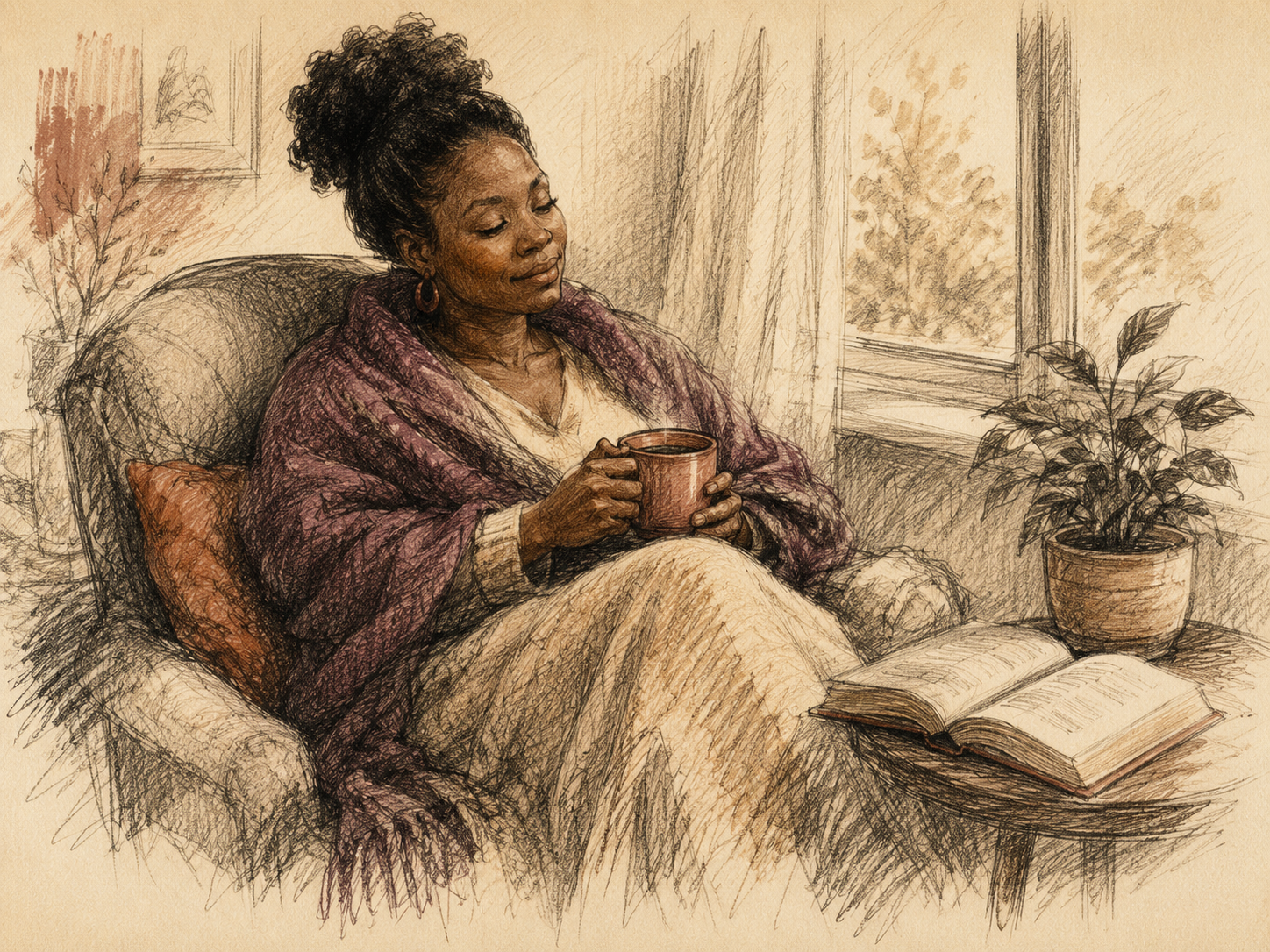
Rest as Refusal and Repair
Rest shifts from a luxury to a necessary form of care. As Tricia Hersey, author of Rest Is Resistance, highlights, rest is a profound form of refusal. It directly challenges systems that treat human beings as tools for endless productivity.
Intentional alone time is a vital part of this care. It creates a protective boundary against weathering by offering:
- Time to stop performing and take off the public face.
- Time to breathe without explaining and be quiet without being watched.
- Time to hear your own thoughts and remember that your body is not just here to carry harm.
For Black women, rest is not the opposite of resistance. It is resistance. It is a way of saying: My body is not only here to survive, serve, explain, or endure.
Black Hair Is History, Art and Knowledge
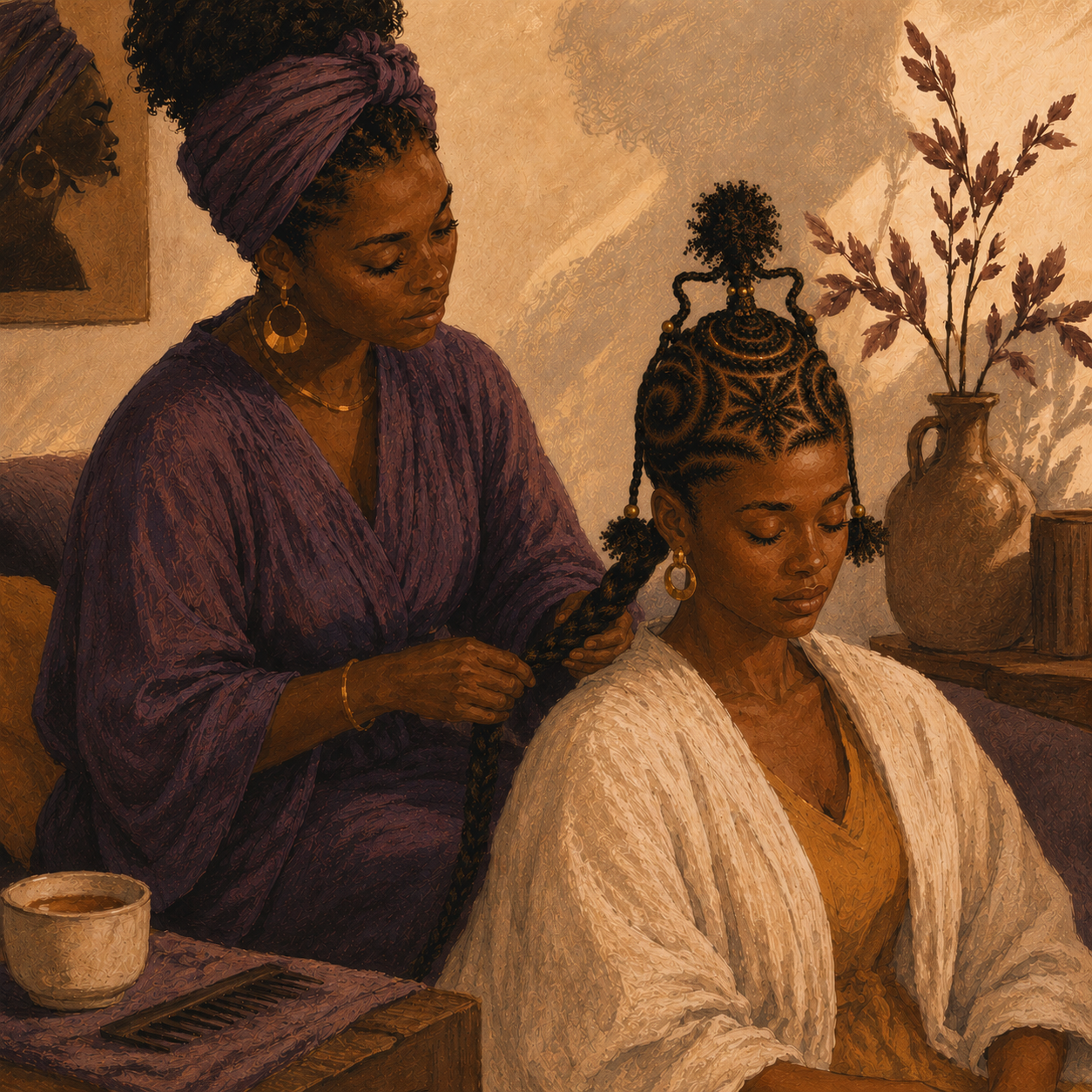
Hair care can be rest.
It can be time set aside.
Time with the body.
Time with memory.
Time with another person’s hands moving with care.
For many Black women and girls, hair is not only about style. It can carry family, creativity, culture, history, and self-expression.
This matters because Black women’s hair has often been misunderstood, policed, or judged through racist ideas of what is “professional”, “neat”, “natural” or “acceptable”.
But Black hair has always held possibility. Braids, twists, locs, wigs, wraps, extensions, and protective styles can be practical, artistic, ancestral, playful, and political.
Choice is not the enemy of authenticity. A Black woman wearing extensions is not automatically rejecting herself. She may be participating in a rich tradition of adornment, protection, invention and care that stretches back to ancient Egypt and pre-colonial Africa.
The styles celebrated today carry a profound lineage of innovation.
In 1952, Christina Jenkins — a Black scientist and inventor who earned a science degree from Leland College — was granted a patent for a method of attaching commercial hair to live hair.
Her work helped shape modern hair-weaving practices and reminds us that Black women’s beauty knowledge has always involved study, skill, invention and technique.
Then and now.
Wearing these styles can also be the continuation of an inheritance.
To bring the history of Christina Jenkins and other overlooked figures to your school, community or workplace, use the email link below to enquire about our Black Women Trailblazers learning sessions →
A Black woman wearing her natural hair is not automatically making a political statement for public consumption. Both can be true.
Black hair is beauty. Black hair can be care. Black hair is memory. Black hair is invention. Black hair can be freedom.
Black women’s histories are full of artists, thinkers, organisers, inventors, healers, writers, and changemakers whose contributions have too often been hidden.
Black Women Trailblazers
Discover Overlooked Legacies Christina Jenkins is just one of many extraordinary figures who shaped our world. The Black Women Trailblazers learning sessions explore these overlooked lives, helping communities and organisations understand Black women’s creativity, resistance, brilliance, and world-changing knowledge.
Bring this workshop to your community: contact events@littlero.org
Written in Hair – Opening Verse
Black hair is love passed hand to hand,
a pathway home through no man’s land.
It carries beauty, memory and history too,
and some say maps to freedom were hidden from view.
Written in Hair
Poem by Roz Etwaria
© 2026 Roz Etwaria. All rights reserved.
Written In Hair - Full Poem
Black hair is love passed hand to hand,
a pathway home through no man’s land.
It carries beauty, memory and history too,
and some say maps to freedom were hidden from view.
It was tender care, a blessing rare,
my mother’s gentle hands plaiting my hair.
A language of beauty, status and grace,
telling stories of lineage, love and place.
From the style, we knew who was single, who was queen,
what family, what nation, where one had been.
Hours of adornment, community and care,
long before the world was told such things were rare.
So whether it’s braids or locs, twists or a weave,
they’re older than fashion — don’t be deceived.
And whether we’re crowned with hair or a head worn bare,
our beauty is ours, in the choosing and care.
These traditions are ancient, enduring and fair —
older than empires, written in hair.
© 2026 Roz Etwaria. All rights reserved.

A Separate Land
This is my thesis in poet form
Verse 01: What it means to be a Black woman
What it means to be a Black woman — is tangled in the word race — and race itself declares we were never meant to win this chase.
We’re the poster girls for “diversity and inclusion,” paraded through the workplace fair, but look up that ladder — it’s white, all the way up there.
Even our hair gets shade because it grows to sun; we’re taught to hide the light — ashamed of what’s begun.
Full Version
What it means to be a Black woman — is tangled in the word race — and race itself declares we were never meant to win this chase.
We’re the poster girls for “diversity and inclusion,” paraded through the workplace fair, but look up that ladder — it’s white, all the way up there.
Even our hair gets shade because it grows to sun; we’re taught to hide the light — ashamed of what’s begun.
What it means to be a Black woman — is masking from the start of the day. For some, it’s putting on a wig, ‘cause that’s the only way.
That mask? It’s worn before we reach the door — clothing, colour, and a whole lot more.
I am demoralised. Beaten — in word and deed. Unfairly arrested, made visible as if I’m the face of the world’s misdeeds.
And when I should be seen — I disappear, drowned by your discomfort, erased by your fear.
What it means to be a Black woman — is something even Black men can’t understand. The standard of Blackness judged through them, but we enter from a separate land.
Don’t look to a Black man for backup — they are a racial currency, and when the world turns cruel, too many look away from me.
So goes the Black woman’s journey: Alone. Watched. Annoyed — Denied the fire of anger, folded into something we have to hide.
It’s living in constant fear — rebranded “resilience” with a grin, applauding the strength it takes to survive the mess they put us in.
There’s nothing to clap for when every day you’re the mule, when they pile on stick after stick and call you strong — we’re not fooled.
So when I hear “resilience,” it sounds like a threat — ’cause their “resilience” is suffering neatly packaged as respect.
But listen — here’s the part that sings for me: The joy. The celebration. The rhythm, the sway. The music that moves my way.
The fact that we’re still here — that speaks volumes, clear. The fact that we’re emulated, even when they won’t revere.
Our language, our earrings, our fashion — all seen. You steal it, you wear it, you claim it’s your dream — another way to take away how I am not seen.
What it means to be a Black woman — is something dark, deep down inside. Not the colour of my skin, but the fear they’d rather I didn’t survive.
But here’s my truth, sincerely — with my sisters by my side, we manage, we survive, and sometimes — we even rise.
What it means to be a Black woman — a story bold and true, yet too many don’t listen, and some resent the truth from you.
So what does it mean to be a Black woman? Sometimes, I still don’t know. Because some days — just being feels like the hardest thing to show.
And yet — We stand — Not because the world was kind, but because we refused to disappear. We are not resilience; we are resistance — With joy, with hope, with fear.
So, we keep on moving — because we Dare.
By Roz Etwaria
Copyright and Attribution
© 2026 Roz Etwaria. All rights reserved.
The concepts BLACKOUT and POPS were developed by Roz Etwaria through the research project The Grammar of Social Death: BLACKOUT, POPS, and the Positioning of Black British Women in the UK Racial Hierarchy.
Website text, poem and learning materials on this page may not be copied, adapted, reproduced or used for training, teaching, commercial or organisational purposes without written permission.
Illustrations on this page may not be copied, reused, altered or redistributed without permission.
For permission requests, please contact events@littlero.org
Get Social
News & Resources

Guest House – Rumi
The dark thought, the shame, the malice,
Meet them at the door laughing,
And invite them in.

The Trauma Industrial Complex: An Ethical Test for Modern Leadership
I. The Price of Witnessing Grief We’ve all seen it — raw, on-screen interviews with survivors of catastrophic events. Moments of unbearable pain turned into public spectacle. What should be dignified reporting often becomes a consumable commodity. This defines the...

Stop Protecting Privilege and Start Protecting People
Why our laws must move beyond allegiance and start defending the vulnerable instead of the powerful. The recent scandals surrounding figures of immense privilege and influence have revealed a painful truth: our system of protection for young women is broken. When the...
Let’s Learn Together!